Top 6 Advantages and Disadvantages of Air Transport
Table of Contents
Advantages and Disadvantages of Air Transport
The most recent mode of travel is air transport. In almost all countries worldwide, the two world wars provided a big boost for the growth of air transport. Air transport’s unusual feature is that a particular surface track is not needed for its operations.
If your consumers need to move their products outside the country, price is not the only consideration when selecting the best partner to collaborate with. Many other important factors will help you determine whether each foreign freight forwarder can meet your clients’ demands, such as delivery urgency and the requested mode of transport.
Air transport is one of the ways to move goods that has been very common in recent years when it comes to speed and distribution protection. We discussed beforehand the characteristics and benefits of transport methods, such as land or water, and in this step we will concentrate on the key air benefits.
You may be interested in our blog: Top 10 Advantages and Disadvantages of Road Transport in India
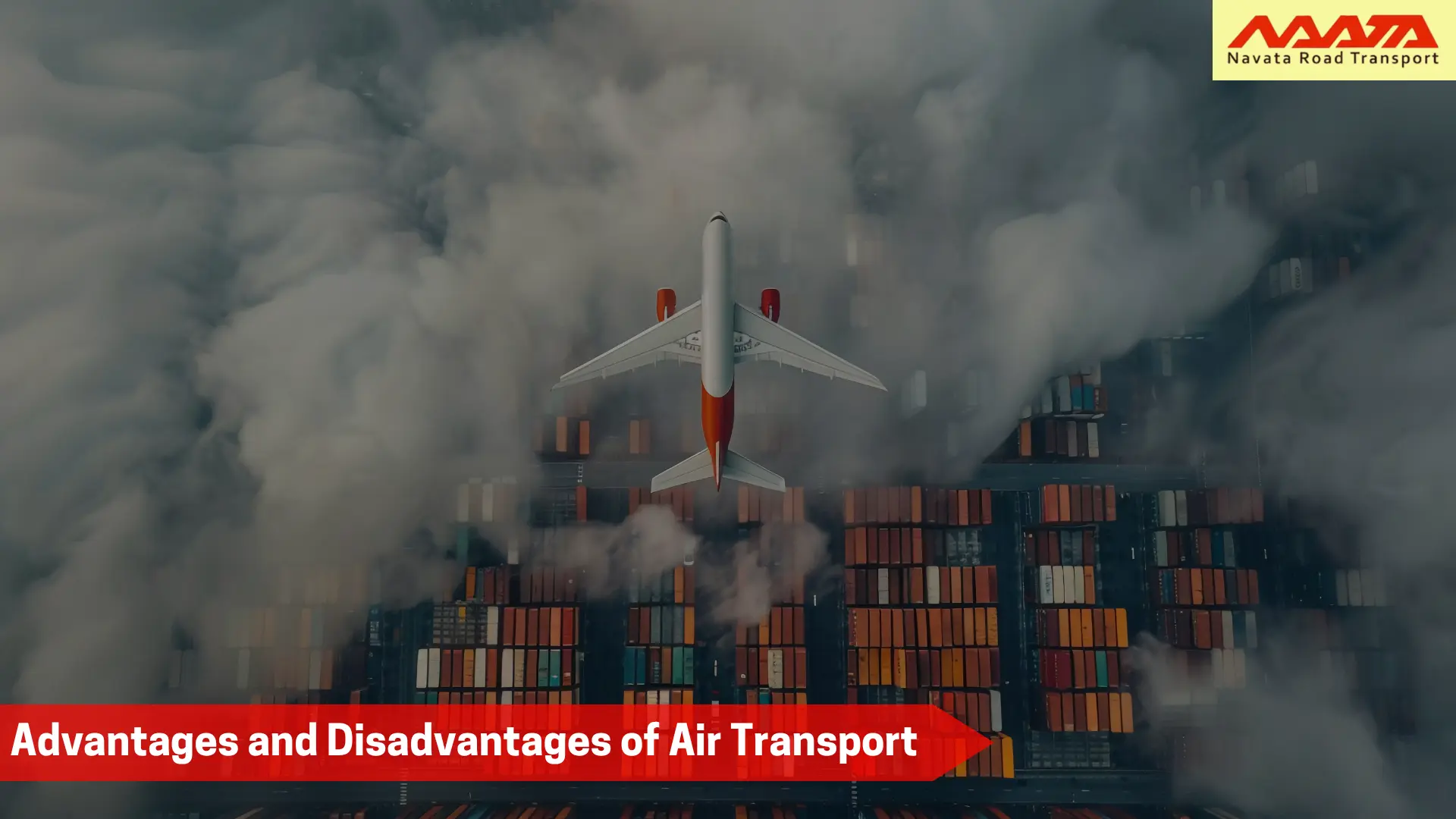
Advantages of Air Transport
1. High Speed
Air is the type of freight capable of traveling long distances in short periods of time. This makes this model an optimum choice if the client has an urgent need to ship a product or if their freight demands special standards of protection or acclimation. It is the quickest transport mode and is therefore ideal for long-distance transport of goods. It takes less time.
2. Fast Service
Air transportation offers convenient, reliable and fast services of transport. It is considered the cheapest way to ship peregrinated goods. It offers a standard, convenient, reliable and fast service.
3. Send almost everywhere your freight
In regions that are not readily accessible to other modes of transport, air transport is considered to be the only means of transport. Open to all regions, irrespective of land interference. A vast network of airlines covering nearly the whole globe is available for many airlines. This ensures that the package can be sent almost anywhere.
4. High Standard of Security
High standard of protection with a low risk of robbery and injury. Shipping by air has a high degree of security since airport safety restrictions on cargo are strictly enforced. Tightly controlled airport controls also minimise cargo theft and loss.
5. Natural Route
An aircraft can fly to any location without seeing any natural obstacles or barriers. Since customs formalities are easily compiled. It eliminates the need for more time to seek clearance. Air travel is used for relief operations during earthquakes, floods, accidents, and famines.
6. There is less need for heavy packaging
Air exports, in general, entail less hard packaging than ocean shipments. This ensures you save both time and money by not having to provide extra packaging services.
Disadvantages of Air Transport
Climate conditions that are adverse: Extreme weather will cause planes to be grounded and airports to close, halting shipments for several days and rendering the service ineffective.
1. Risky
Air travel is the riskiest mode of transport, since there can be considerable losses to goods, customer and crews as a result of a minor crash. Compared to other means of travel, the risks of collisions are higher.
2. Cost
Air travel is considered to be the most expensive means of transportation. The cost of maintaining aircraft is higher and the costs for the building of aerodromes and avions are much higher. That’s why air travel is so expensive that it gets beyond ordinary people’s grasp.
3. Some Product Limitation
There is a whole variety of materials not suitable for such products, from explosives, gases, batteries, fired solids and liquids, which cannot be shipped by air to name but a few.
4. Capacity for Small Carriage
The aircraft have no room and therefore are not ideal for carriage of voluminous and cheaper materials. As is seen for rails, the load volume cannot be raised.
5. Enormous investment
Air travel calls for enormous spending in aerodrome building and servicing. It also calls for professional, qualified and qualified staff that need a significant investment.
Advantages vs Disadvantages of Air Transport
| Factor | Advantages | Disadvantages |
|---|---|---|
| Speed | Fastest mode of transport for urgent and long-distance deliveries. | Flight schedules may be delayed due to bad weather. |
| Coverage | Connects countries and remote regions through global airline networks. | Limited airport availability in some regions. |
| Delivery | Reliable transit times for time-sensitive shipments. | Unexpected flight cancellations can affect delivery. |
| Security | High cargo security with strict airport screening. | Hazardous goods are heavily restricted. |
| Packaging | Requires less protective packaging due to shorter transit. | Special packaging may still be needed for sensitive cargo. |
| Cost | Ideal for high-value and perishable goods. | Highest freight cost among all transportation modes. |
| Cargo Capacity | Suitable for lightweight and valuable cargo. | Limited space for bulky or oversized shipments. |
| Investment | Supports global trade and emergency logistics. | Requires expensive aircraft, airports, and infrastructure. |
Advantages of Air Transport
Speed
Fastest mode of transport for urgent deliveries.
Coverage
Worldwide connectivity through airline networks.
Delivery
Reliable transit for time-sensitive cargo.
Security
Strict airport screening minimizes theft and damage.
Packaging
Less heavy packaging required.
Best For
High-value, urgent and perishable goods.
Disadvantages of Air Transport
Cost
Most expensive transportation mode.
Capacity
Not suitable for bulky or oversized cargo.
Weather
Flights may be delayed by fog, storms or heavy rain.
Restrictions
Hazardous materials cannot be transported easily.
Infrastructure
Requires airports, aircraft and high capital investment.
Best Avoided For
Heavy, low-value and bulk commodities.
What do I know before flying my goods?
Since each aircraft has different requirements and restrictions, you must be extremely particular about the amount of the shipment as well as the general characteristics of the aircraft that will carry it.
Find out the location of your goods, the airport where it will fly, and all other details that are relevant to you; this will give you a better understanding of the whole operation.
Understand the features of the commodity you want to sell or import, and decide if air travel is the right choice for you. In certain cases, it may be the only choice, but on others, there may be a larger vision. This blog will help you to understand all the advantages and disadvantages of air transport.
When to Use Air Transport
Air transport is the preferred choice when speed, reliability, and security are more important than transportation cost. While it is more expensive than road, rail, or water transport, it provides unmatched delivery speed and global connectivity for time-sensitive shipments.
Air transport is the best option when:
- Urgent deliveries are required: Ideal for express shipments, emergency supplies, and just-in-time inventory that must reach its destination quickly.
- Shipping high-value goods: Electronics, luxury products, jewelry, and precision equipment benefit from the enhanced security offered by air freight.
- Transporting perishable items: Fresh fruits, vegetables, seafood, flowers, pharmaceuticals, and vaccines require fast transit to maintain quality.
- International or long-distance shipments: Air transport connects major cities and countries worldwide, reducing transit times significantly compared to sea freight.
- Delivering to remote or inaccessible regions: Areas with limited road or rail infrastructure can often be reached efficiently through airports.
- Ensuring supply chain continuity: Businesses use air freight to prevent production delays caused by inventory shortages or unexpected demand spikes.
Air Transport May Not Be Suitable When
Air transport is generally not the most economical choice for heavy, bulky, or low-value cargo. In such cases, road, rail, or water transport offers better cost efficiency. It is also less suitable for hazardous materials or oversized shipments due to strict aviation regulations and aircraft capacity limits.
You May Also Like to Read: Pros and Cons of Air Transportation
FAQs
Why is air transport more expensive?
Air transport is more expensive because of high fuel costs, aircraft maintenance, airport charges, advanced security measures, and specialized cargo handling, all of which increase operating expenses.
What types of goods are best transported by air?
Air transport is best suited for high-value, lightweight, perishable, or time-sensitive goods such as electronics, pharmaceuticals, medical supplies, fresh produce, flowers, and urgent business shipments.
When should businesses choose air transport?
Businesses should choose air transport when fast delivery, product safety, and reliable international shipping are priorities. It is especially useful for emergency shipments, just-in-time inventory, and global trade involving valuable or perishable cargo.