Logistics Manager Roles and Responsibilities: An Ultimate Guide
Table of Contents
What is a Logistics Manager?
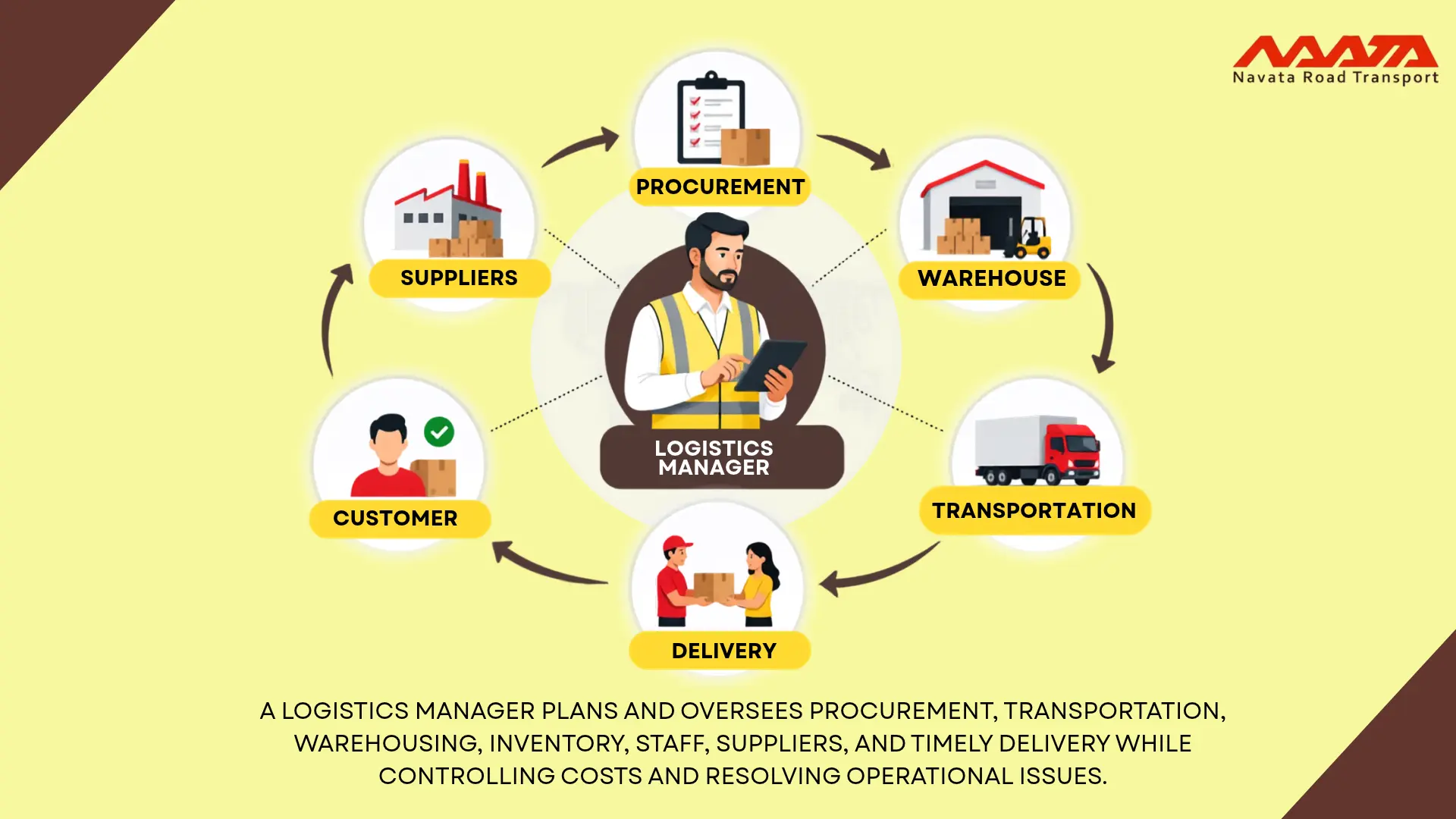
A logistics manager (sometimes called a logistics supervisor) plans, coordinates, and oversees how goods move through a supply chain from procurement and transportation to warehousing and final delivery. Day-to-day, this covers managing shipping schedules, negotiating with suppliers and carriers, supervising staff, and troubleshooting delays. The sections below cover the role’s core responsibilities, the education, training, and skills typically required, the tools logistics managers use, and a practical example of how these responsibilities play out on a given day.
A logistics manager is someone who is in charge of the organisation of commodity delivery and storage. He is responsible for ensuring that products are delivered on schedule and to the correct destination.
Additionally, the logistics manager collaborates with raw material suppliers, merchants, manufacturers, and customers.
He is responsible for a variety of tasks, including handling stock levels, transportation costs, and delivery times, supervising staff and their tasks, organizing and executing projects, trying to implement safety protocols, negotiating with suppliers and customers, and growing the business through the acquisition of new projects and contracts.
Logistics managers must first determine how to get the items they need to send and then predict the most cost-effective method of transporting those commodities. Another function of supply chain management is to warehouse and store the goods they oversee.
Logistics Manager Roles and Responsibilities
While the responsibilities of a logistics manager may seem simple, their job includes much more than just ensuring that a product is loaded into a truck and sent out for delivery. Therefore, what do they do on a daily basis?
Logistics managers are responsible for an organization’s supply chain. They dictate how an organisation should acquire goods and distribute them. Due to the wide scope of this job, logistics managers must possess excellent organisational and multitasking abilities.
A logistics manager job description may contain the following tasks and daily responsibilities:
- Managing and ensuring the accuracy of product storage warehouse inventories
- Facilitating the establishment of commercial connections between customers and suppliers
- Discussions and negotiations with goods carriers about shipment costs
- Establishing and managing incoming and outbound shipping schedules
- Managing the flow of resources and goods throughout an organisation
- Collaborating with different divisions within the business to enhance logistics
- Supervising the remainder of the logistics team’s job
- Supervising the process of importing and exporting a product
- Coordinating manufacturing schedules, storage, and shipment of certain goods and commodities.
- Developing procedures and systems for scheduling and tracking procurement and distribution operations.
- Liaison with customers, suppliers, and employees to ensure inventory is properly documented and ordered, as well as to guarantee delivery schedules are adhered to.
Logistics Manager Requirements
Apart from industry knowledge, there are other talents that may be critical for professional success in the logistics sector, especially as a manager. Due to the nature of the job, which entails coordinating business solutions across departments, communication skills must be strong and adaptable. Additionally, an interest in information technology goods and software development is necessary.
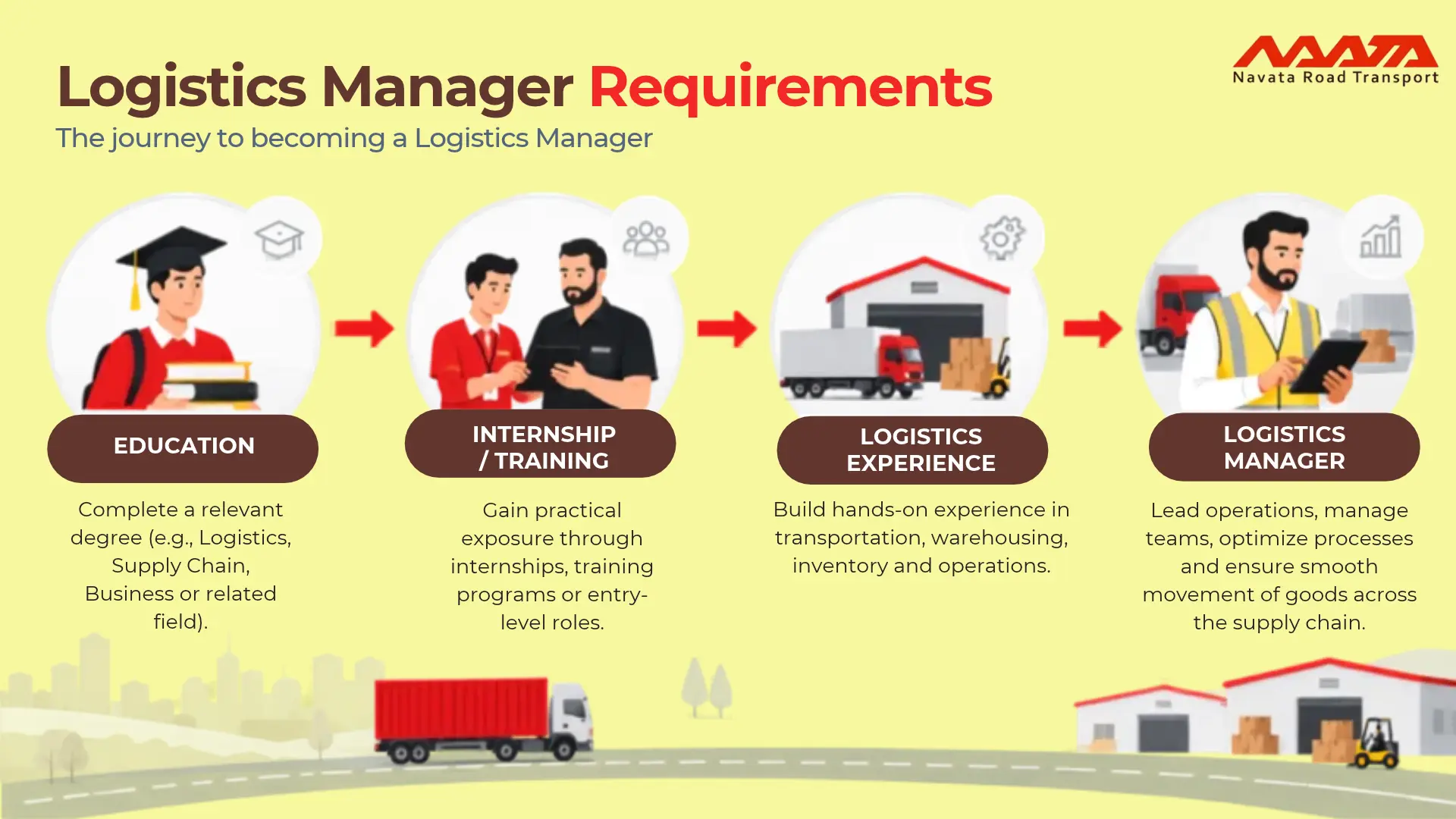
While a logistic manager’s credentials are often derived from work as a generalist logistician, companies frequently demand applicants to have a bachelor’s degree. Certain logistics managers may get their jobs with an associate’s degree provided they have adequate professional experience or appropriate industry qualifications.
Education
While some companies may take substantial professional experience in lieu of a degree, the majority of positions need a bachelor’s degree. A bachelor’s degree in an area such as supply chain management, business administration, or logistics would provide a logistic manager with the basic skills and subject knowledge required for their profession.
Training
Aspiring logistic managers may begin acquiring experience while pursuing their degree by doing an internship. Additionally, individuals in this role may seek training outside of conventional university courses. If a logistic manager starts his or her career as a general logistician, he or she may get on-the-job training to prepare for advancement to a management position.
Skills
Logistics managers perform a range of functions and have a variety of duties in their positions.
Several advantageous abilities for a logistics manager include the following:
Problem Solving
Leading the logistics team will provide plenty of new difficulties to logistics managers. The daily responsibility of a logistics manager includes developing and implementing strategies and solutions to balance staff time limits, storage space, and shipment constraints.
On-the-job Experience
One of the major responsibilities of a logistics manager is to organise goods in a warehouse and adhere to very big shipping and delivery timetables. Make it easier to do your everyday tasks by keeping comprehensive records of your job and keeping them easily accessible for reference.
Adaptability
A logistics manager is responsible for minimising any delay in their planned daily activities. Since logistics managers are able to continuously modify and rearrange their plans to meet within specified deadlines, they need a high level of flexibility.
Leadership
In their work environment, a logistics manager is a leader. Gaining a full understanding of each employee’s contributions to the team will enable managers to accurately assign work assignments according to each employee’s unique skills and strengths. As the spokesperson for their team, the logistics manager will also be involved in dealing with other departments, business partners, and customers.
Communication in the business
A logistics manager must interact often with various business partners, suppliers, customers, other departments, and logistics employees. Managers that successfully maintain tight touch with all of these contacts may help optimise the supply chain’s operations.
Tools and Software Logistics Managers Use
Modern logistics managers generally rely on a range of software to plan and track goods on the move. Common categories include Warehouse Management Systems (WMS) for tracking inventory and space within storage facilities, Transportation Management Systems (TMS) for planning and monitoring shipments, and Enterprise Resource Planning (ERP) platforms for coordinating logistics with wider business functions like procurement and finance. Real-time tracking and GPS-based visibility tools are also widely used, helping logistics managers monitor shipment status and respond quickly when a delay or disruption occurs. Familiarity with these systems often appears as a listed requirement in a logistics manager job description, alongside the organisational and people-management skills covered above.

A Day in the Life: Practical Example
To see how these responsibilities come together, consider a logistics manager at a mid-sized distribution business. Each morning typically starts with a review of overnight shipment updates and any exceptions – a delayed truck, a missed pickup, or a stock discrepancy flagged by the warehouse team. From there, the manager works through the day’s priorities: confirming outbound shipping schedules, checking in with suppliers on an upcoming delivery, and coordinating with the warehouse team on storage space for an incoming shipment.
Throughout the day, the manager is also the point of contact when something goes wrong – a customer asking about a delayed order, a carrier flagging a routing issue, or a team member needing a decision on how to handle an unexpected backlog. By the end of the day, the manager has typically touched every part of the goods-in-motion process: procurement coordination, transportation cost decisions, warehouse and inventory oversight, and direct communication with the people who keep the supply chain moving.
See These Responsibilities in Action
See how Navata's own logistics and warehousing operations put these day-to-day responsibilities into practice.
Explore Our ServicesThanks For Reading: Logistics Manager Roles and Responsibilities: An Ultimate Guide
Recent Posts