Advantages and Disadvantages of Rail Transportation : The Guide
Table of Contents
Advantages and Disadvantages of Rail Transportation
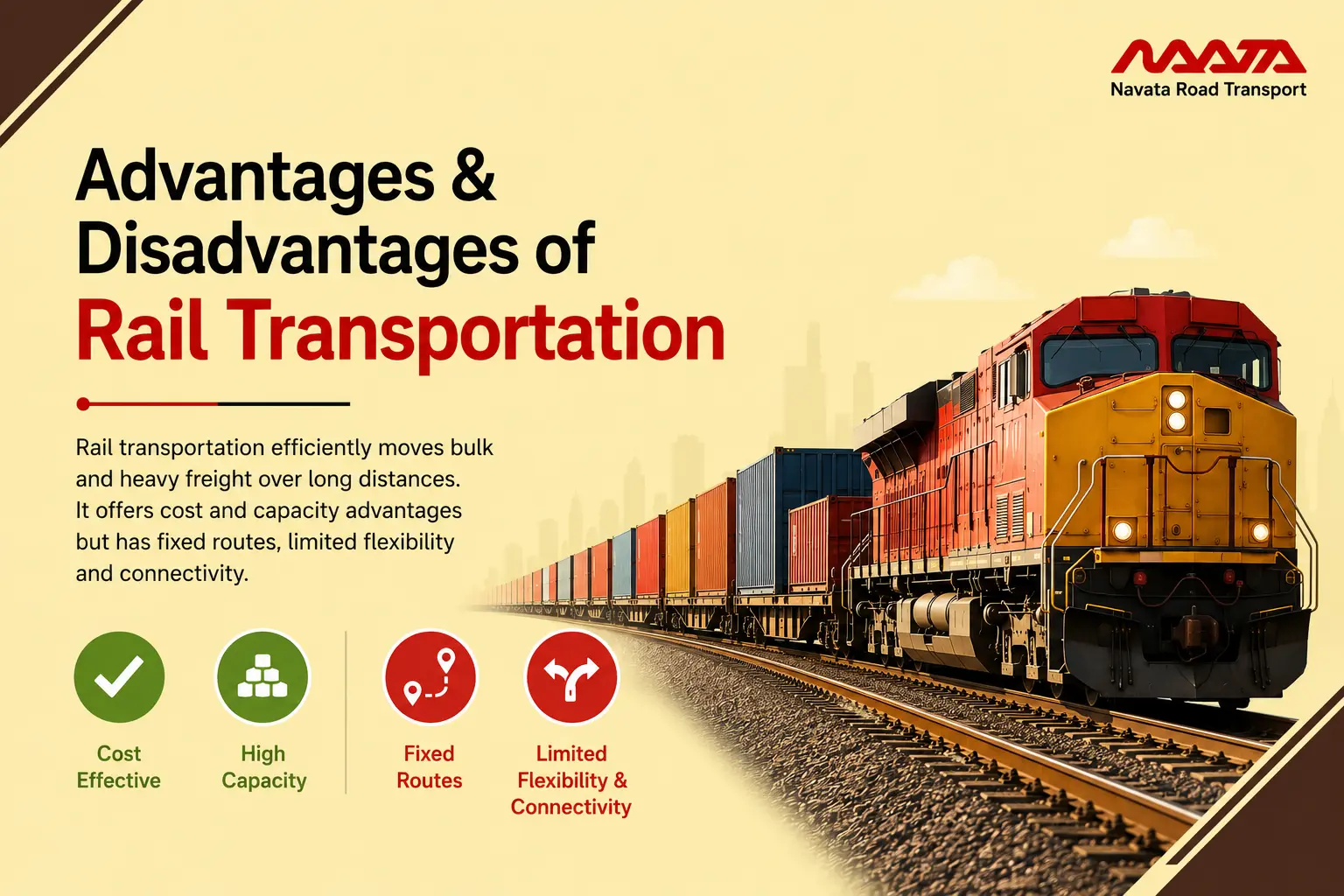
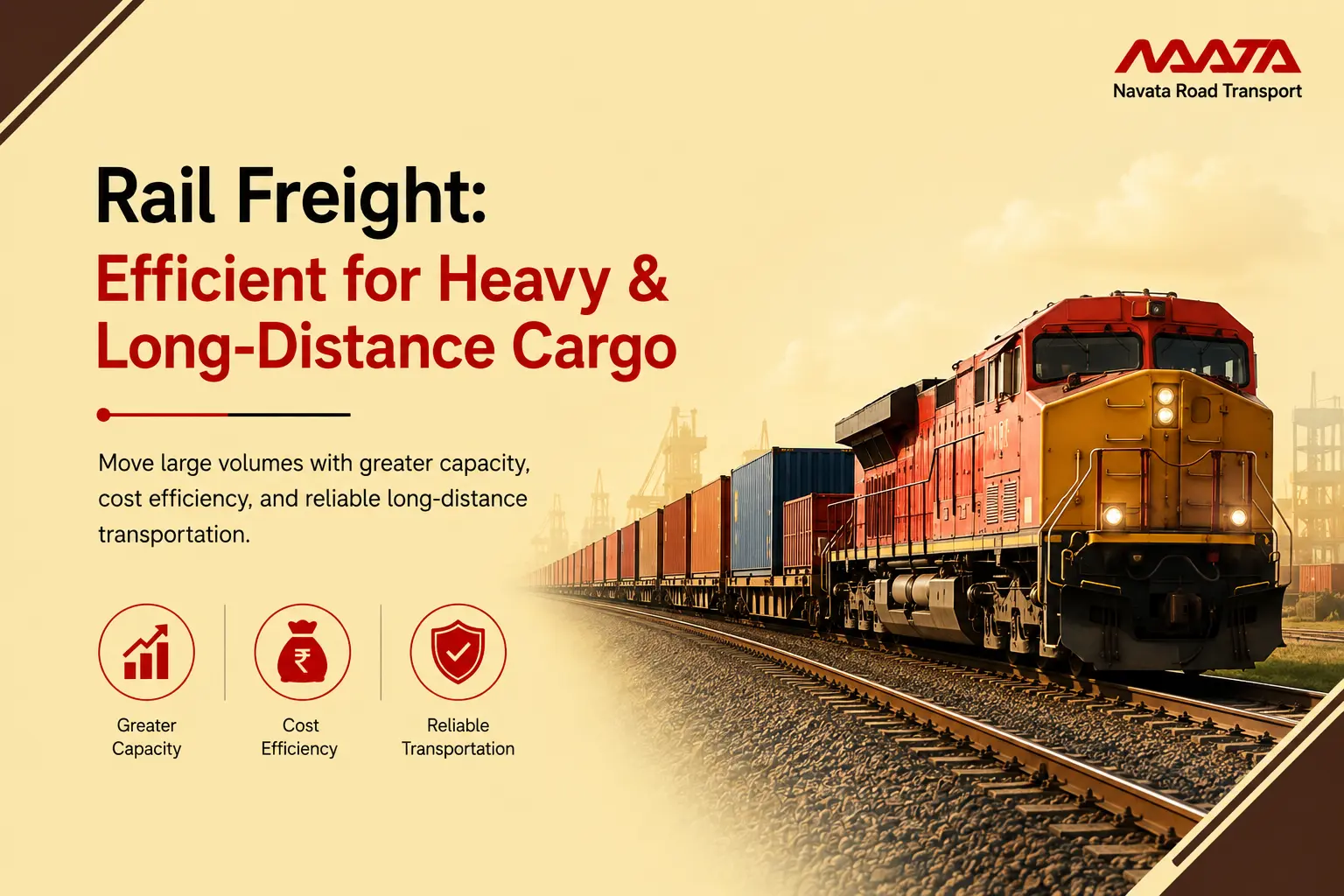
Rail transportation moves freight and passengers along a fixed network of tracks, using locomotives to pull loaded wagons over long distances. For shippers, it remains one of the most efficient ways to move bulk and heavy cargo when door-to-door speed isn’t the priority.
The advantages and disadvantages of rail transportation come down to a straightforward trade-off: rail is economical and efficient for bulk, long-distance movement, but it comes with real limits around flexibility, connectivity, and infrastructure. This guide breaks down both sides so you can decide when rail earns a place in your shipping strategy.
You May Also Like To Read: Top 6 Advantages and Disadvantages of Air Transport
Advantages of Rail Transportation
Businesses turn to rail transport when a shipment’s size, weight, or distance makes it a strong economic and operational fit. The advantages of rail transportation are clearest for high-volume, long-haul freight rather than small or urgent shipments.
Cost-Effective for Long-Distance Transportation
Rail transport becomes more economical as distance and volume increase. Because a single train can carry the freight equivalent of dozens of trucks, the cost per ton drops significantly on long hauls, particularly for high-volume freight moving between major industrial or port hubs.
Suitable for Heavy and Bulk Cargo
Rail wagons are built to handle weight and volume that road vehicles can’t match economically. Commodities such as coal, minerals, cement, steel, and grain are natural fits for rail because they’re dense, heavy, and typically move in large, planned quantities rather than as urgent, time-critical shipments.
High Carrying Capacity
A single train can move a large quantity of freight in one journey, consolidating what would otherwise require a large number of separate truck movements. This makes rail a practical choice when volume, rather than speed, is the primary shipping requirement.
Reliable for Long-Distance Freight
Scheduled rail movement gives shippers a predictable long-distance option, since trains run on fixed timetables and dedicated track rather than sharing road capacity with general traffic. This doesn’t mean rail is always faster or more reliable than every other mode; reliability depends on network capacity, route congestion, and terminal efficiency but for planned, high-volume freight, the fixed-schedule nature of rail supports consistent long-haul planning.
Lower Fuel Consumption
Rail transport becomes more economical as distance and volume increase. Because a single train can carry the freight equivalent of dozens of trucks, the cost per ton drops significantly on long hauls, particularly for high-volume freight moving between major industrial or port hubs.
Reduced Road Congestion
Shifting suitable freight from road to rail takes a meaningful number of truck movements off the highway network. For shippers moving large or repeat volumes, this can also reduce exposure to road congestion, tolls, and the operational unpredictability that comes with heavy traffic corridors.
Safer for Certain Types of Cargo
Rail can be a strong fit for certain heavy, bulk, or controlled freight movements, where consolidated loading and fixed-track operation reduce the handling and exposure that comes with multiple road transfers. This isn’t a claim that rail is universally safer than road transport safety outcomes depend on cargo type, packaging, and handling at every transfer point but for bulk and industrial freight, rail’s fewer touchpoints can work in a shipper’s favor.
Environmentally Efficient
Because one train can replace a large number of truck trips, rail transport can offer environmental advantages when moving large freight volumes over long distances, particularly around fuel use per ton-mile of cargo moved. Shippers with sustainability targets often evaluate rail or intermodal options for exactly this reason, though the actual environmental benefit depends on load factors, route, and the energy source powering the rail network.
You May Also Like To Read: Top 10 Advantages and Disadvantages of Road Transport
Disadvantages of Rail Transportation
Rail transport also comes with real limitations, and understanding the disadvantages of rail transportation is just as important as knowing its strengths when deciding how to move a shipment.
Limited Door-to-Door Connectivity
Rail moves between terminals, not between a shipper’s dock and a customer’s dock. That means almost every rail shipment needs first-mile and last-mile road transportation to bridge the gap between the origin, the railhead, the destination terminal, and the final delivery point.
High Infrastructure Costs
Railway networks require substantial investment in track, terminals, rolling stock, and maintenance. This infrastructure cost is generally borne by railway operators and governments rather than individual shippers, but it does shape where rail service is available and how extensive the network is in a given region.
Fixed Routes and Limited Flexibility
Trains run on fixed tracks between fixed terminals, which means rail can’t offer the route flexibility of road transportation. If a shipment’s origin or destination isn’t near a railhead, or if a route needs to change on short notice, road transport is almost always the more adaptable option.
Longer Transit Times for Some Shipments
Depending on network scheduling, terminal handling, and the need for connecting road transportation, some rail shipments can take longer door-to-door than an equivalent direct road movement. This isn’t true for every route or every shipment, but rail generally isn’t the right choice when speed or highly flexible scheduling is the top priority.
Dependence on Railway Infrastructure
Rail service quality depends on network availability, terminal access, congestion on shared track, and the condition of the infrastructure itself. Maintenance work, capacity constraints on busy corridors, or limited terminal access in a given area can all affect how practical rail is for a specific shipment.
Additional Handling May Be Required
Because rail cargo typically moves between terminals rather than door-to-door, shipments often go through extra loading, unloading, and terminal transfers compared with a single direct truck movement. Each additional handling step adds time, cost, and a point where cargo needs to be managed carefully, especially for multimodal moves involving more than one mode of transportation.
Not Ideal for Short-Distance Shipments
For short-haul or purely local, door-to-door movements, road transport is usually more practical than rail. The fixed costs of terminal handling and first-mile/last-mile trucking are harder to justify over short distances, where rail’s long-haul cost advantage doesn’t have room to play out.
When Is Rail Transportation the Right Choice?
Rail transportation tends to make the most sense in a specific set of shipping scenarios.
- For Heavy and Bulk Goods:- Dense, heavy commodities like minerals, cement, steel, and grain are well suited to rail’s high carrying capacity and per-ton cost advantage.
- For Long-Distance Shipments:- The longer the haul, the more rail’s cost efficiency has room to outweigh the added terminal handling and first-mile/last-mile trucking it requires.
- For Cost-Sensitive Freight:- When cost per ton matters more than speed, and the shipment isn’t time-critical, rail transport can be a strong economic choice, particularly at scale.
- For Large-Volume Cargo:- Shippers moving large, repeat volumes between the same origin and destination corridors, especially where both ends have reasonable rail access, are well positioned to benefit from rail’s carrying capacity.
Rail is less likely to be the right choice for urgent, time-critical shipments, small or irregular volumes, routes without practical rail access at either end, or purely short-distance, door-to-door movements. In those cases, road transport or a road-led multimodal solution is typically more practical.
How to Choose Rail Transportation (Check List)
Rail transportation doesn’t have to be an all-or-nothing decision. Use this checklist to evaluate whether rail, or a road-and-rail combination, fits a specific shipment:
- Check shipment distance:- rail’s cost advantage strengthens over longer hauls.
- Identify cargo type and volume:- bulk, heavy, or large-volume freight is generally the best fit.
- Compare transportation costs:- weigh rail’s per-ton cost against road transport for the specific lane.
- Check rail connectivity:- confirm practical railhead access near both the origin and the destination.
- Consider required delivery time:- rail generally suits planned freight better than urgent, time-critical shipments.
- Evaluate first-mile and last-mile requirements:- factor in the road transportation needed on both ends.
- Consider multimodal transportation if needed:- combining road and rail can offer the cost benefits of rail with the flexibility of road.
Rail doesn’t always need to operate as a standalone mode. For many shippers, a road-plus-rail combination trucking to and from the railhead, with rail covering the long-haul middle leg delivers a more practical and cost-effective solution than choosing one mode exclusively.
Conclusion
The advantages and disadvantages of rail transportation both come down to the same core trade-off: rail delivers strong cost efficiency, high carrying capacity, and lower fuel consumption for heavy, bulk, long-distance freight, but it can’t match road transport’s flexibility, route reach, or true door-to-door service.
Rail is particularly valuable for suitable heavy, bulk, high-volume, and long-distance shipments, while road or a road-rail multimodal approach tends to serve short-haul, time-critical, or highly variable shipments better. The right choice depends less on which mode is ‘better’ overall and more on matching your cargo type, volume, distance, and timeline to the mode built for that job.
Thanks For Reading: Advantages and Disadvantages of Rail Transportation
FAQs
For long distances and large, heavy volumes, rail transportation is often cheaper per ton than road transport, since one train can carry the equivalent of many trucks. For shorter distances or smaller, irregular shipments, road transportation is usually more cost-effective once terminal handling and first-mile/last-mile trucking are factored in.
Rail wagons are built to carry large, heavy volumes economically, which makes rail a strong fit for dense commodities like coal, minerals, cement, steel, and grain. These goods typically move in large, planned quantities rather than urgent shipments, which plays directly to rail's cost and capacity strengths.
Rail transportation can offer environmental advantages for large-volume, long-distance freight, since a single train replaces a significant number of truck trips and generally uses less fuel per ton of cargo moved. The actual environmental benefit varies by load factor, route, and the energy source powering the rail network, so it shouldn't be assumed to apply equally to every shipment.
Common goods moved by rail include coal, minerals, cement, steel, grain, containerized general cargo, automobiles, and other heavy or bulk commodities. These goods typically share high volume, high weight, and planned rather than urgent shipping timelines.
Rail transportation is generally not the most practical option for short-distance or purely local shipments. The fixed costs of terminal handling and connecting road transport are harder to justify over short hauls, where road transportation's direct, door-to-door service is usually the more efficient choice.
Recent Posts