
Key Components of Supply Chain Management
Table of Contents
The Key Components of Supply Chain Management
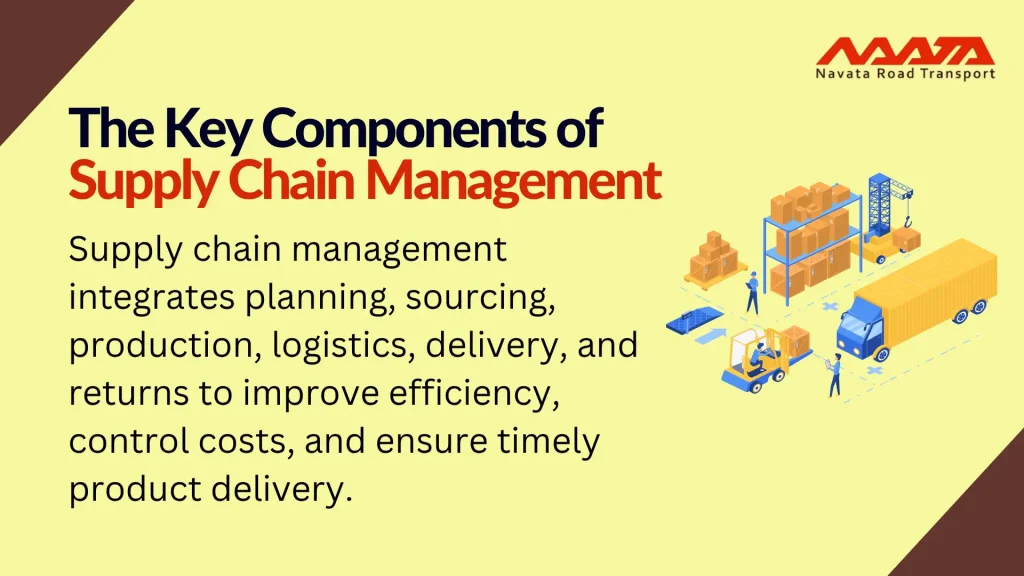
The key components of supply chain management are planning, sourcing, production, logistics and delivery, and returns. Together, they coordinate demand forecasting, procurement, manufacturing, transportation, distribution, and reverse logistics. Managing these components effectively helps businesses reduce costs, maintain inventory, improve operational efficiency, and deliver products to customers on time.
1. Planning
Planning in supply chain is the foundation of supply chain management. It helps businesses anticipate customer demand, determine inventory requirements, and coordinate supply with production and distribution. Effective planning reduces the risk of stockouts, excess inventory, delays, and unnecessary costs while keeping the supply chain aligned with business needs.
a. Demand Planning
Demand planning involves forecasting how much customers are likely to buy. Businesses consider historical sales, market trends, seasonal fluctuations, and upcoming events to prepare for changes in demand.
b. Inventory Planning
Inventory planning determines how much stock a business needs and when it should be replenished. Maintaining the right inventory level helps prevent stockouts while avoiding excess inventory and storage costs.
c. Supply Planning
Supply planning ensures that available materials and products can meet expected demand. It coordinates suppliers, production schedules, inventory, and distribution so that goods are available when and where they are needed.
Example: A retailer expecting higher sales during a festival can forecast demand in advance and increase procurement and inventory to avoid running out of popular products.
2. Sourcing
Sourcing is the process of finding and obtaining the raw materials, components, products, or services a business needs to operate. Effective sourcing helps businesses balance cost, quality, reliability, and availability while building dependable supplier relationships.
a. Supplier Selection
Businesses evaluate suppliers based on factors such as product quality, pricing, reliability, lead times, and delivery capability. Choosing the right suppliers helps maintain consistent operations and reduces supply risks.
b. Procurement
Procurement involves purchasing the required materials or products and managing purchase orders. It also includes coordinating with suppliers to ensure orders are placed, processed, and delivered according to requirements.
c. Supplier Management
Supplier management focuses on monitoring supplier performance, maintaining quality standards, and ensuring reliable deliveries. Regular performance reviews help businesses identify issues and strengthen long-term supplier relationships.
Example: A manufacturer may select suppliers by comparing their price, quality, lead time, and production capacity to ensure a reliable supply of materials.
3. Production
Production in supply chain is the stage where sourced raw materials and components are transformed into finished or saleable products. It involves coordinating manufacturing activities, maintaining quality standards, and scheduling production according to demand and available resources.
a. Manufacturing
Manufacturing converts raw materials and components into finished goods through planned production processes. Efficient manufacturing helps businesses meet customer requirements while making effective use of materials, equipment, and labor.
b. Quality Control
Quality control involves checking products against required specifications and standards. Regular inspections help identify defects, maintain consistency, and ensure that finished products meet customer expectations.
c. Production Scheduling
Production scheduling determines when and how much to produce based on expected demand, available materials, production capacity, and delivery requirements. Proper scheduling helps prevent delays and underutilized resources.
Example: An automobile manufacturer schedules production based on expected vehicle demand and the availability of components, ensuring vehicles can be produced and delivered efficiently.
4. Logistics & Delivery
Logistics and delivery involve storing, handling, transporting, and distributing products from production facilities or warehouses to customers. Efficient logistics ensures goods reach the right destination on time while maintaining visibility, controlling transportation costs, and supporting reliable order fulfillment.
a. Warehousing
Warehousing involves storing products safely until they are needed for distribution. It also includes inventory handling, order preparation, and coordinating the movement of goods within storage facilities.
b. Transportation
Transportation moves goods between suppliers, manufacturers, warehouses, distribution centres, and customers. Businesses may use road, rail, air, or water transportation depending on factors such as distance, cargo type, cost, and delivery requirements.
c. Distribution
Distribution involves moving products from warehouses or distribution centres to retailers, businesses, or customers. Effective distribution helps ensure products are available where and when they are required.
d. Last-Mile Delivery
Last-mile delivery is the final movement of goods from a distribution point to the customer. It plays an important role in delivery speed, customer experience, and overall logistics performance.
Example: A company stores products at a distribution centre and uses road transportation to deliver orders to retailers across different cities.
5. Returns
Returns are an important part of supply chain management because products may need to move back from customers to businesses. Effective returns management uses reverse logistics to handle returned, damaged, or incorrectly shipped products while reducing waste and recovering product value.
a. Product Returns
Product returns can occur when customers return unwanted or defective products, receive damaged goods, or receive an incorrect shipment. Businesses need a clear process to receive and assess these products.
b. Reverse Logistics
Reverse logistics manages the movement of products from customers back to warehouses, retailers, or other facilities. Returned items are typically inspected and sorted to determine the appropriate next step.
c. Recovery, Recycling & Disposal
After inspection, returned products may be restocked, repaired, recycled, or responsibly disposed of, depending on their condition and value. This helps businesses recover usable products and reduce unnecessary waste.
Example: An e-commerce company receives a returned product, inspects it, and decides whether to restock, repair, recycle, or responsibly dispose of it.
6. Inventory Management in Suppy Chain
Inventory management involves controlling stock levels, replenishment, storage costs, and product availability across the supply chain. It helps businesses maintain the right amount of inventory to meet customer demand without holding unnecessary stock.
a. Stock Level Management
Businesses monitor inventory levels to ensure products and materials are available when needed. This helps prevent stockouts while reducing excess inventory.
b. Inventory Replenishment
Replenishment involves determining when and how much stock should be reordered. Accurate demand forecasts and inventory data help businesses maintain consistent product availability.
c. Inventory Cost Control
Effective inventory management helps control costs associated with purchasing, storage, handling, and obsolete stock. Maintaining optimal inventory levels can improve overall supply chain efficiency.
Example: A retailer monitors sales and inventory levels to automatically reorder popular products before stock runs out, while avoiding unnecessary excess inventory.
7. Supply Chain Visibility
Supply chain visibility provides businesses with clear, timely information about inventory, shipments, suppliers, and operations across the supply chain. It helps businesses track goods, identify delays, respond to disruptions, and make better decisions based on real-time information.
a. Real-Time Tracking
Businesses can monitor shipments, inventory movements, and delivery status to understand where goods are and when they are expected to arrive.
b. Data Sharing
Sharing accurate information between suppliers, manufacturers, warehouses, transporters, and customers improves coordination and reduces communication gaps.
c. Issue Identification
Visibility helps businesses identify delays, inventory shortages, transportation issues, and supplier problems early, allowing them to take corrective action.
Example: A business uses shipment tracking and inventory data to identify a delayed delivery and adjust its distribution plans before the delay affects customers.
7 Key Components of Supply Chain Management
| Component | What It Covers | Example |
|---|---|---|
| Planning | Demand forecasting, inventory planning, and supply planning | Forecasting product demand before a seasonal sales period |
| Sourcing | Supplier selection, procurement, and supplier management | Selecting suppliers based on cost, quality, and reliability |
| Production | Manufacturing, quality control, and production scheduling | Converting raw materials into finished products |
| Logistics & Delivery | Warehousing, transportation, distribution, and last-mile delivery | Transporting products from a distribution centre to retailers |
| Returns | Product returns, reverse logistics, recovery, and recycling | Inspecting and restocking a returned product |
| Inventory Management | Stock levels, replenishment, storage costs, and product availability | Reordering products before inventory reaches a critical level |
| Supply Chain Visibility | Tracking inventory, shipments, suppliers, and supply chain operations | Monitoring a shipment in real time to identify delivery delays |
How Do the Components of Supply Chain Work Together?
The five components of supply chain management work as a connected process rather than separate activities. Planning forecasts demand, sourcing secures the required materials, and production converts them into finished goods. Logistics and delivery then move products to customers, while returns manage products coming back into the supply chain.
Planning → Sourcing → Production → Logistics & Delivery → Customer → Returns → Back into the Supply Chain
Information and decisions flow between each stage. Demand forecasts influence purchasing and production, while inventory levels and supplier availability affect logistics and delivery. Customer orders and returns provide information that can be used to improve future planning, creating a continuous supply chain cycle.
Importance of Supply Chain Components
Managing the key components of a supply chain effectively helps businesses improve operational efficiency and respond to customer needs. Well-coordinated planning, sourcing, production, logistics, and returns can deliver several benefits:
- Better inventory control: Maintain appropriate stock levels and reduce excess inventory and stockouts.
- Lower operating costs: Improve resource utilization and reduce unnecessary procurement, storage, and transportation expenses.
- Improved supplier performance: Monitor suppliers more effectively and maintain reliable quality and delivery.
- Faster delivery: Coordinate transportation and distribution to move products to customers more efficiently.
- Better customer satisfaction: Improve product availability, order accuracy, and delivery reliability.
- Reduced supply chain disruptions: Identify potential issues and respond more effectively to delays or supply shortages.
- Greater visibility and coordination: Connect information across supply chain activities to support better decisions and smoother operations.
Conclusion
The five key components of supply chain management planning, sourcing, production, logistics and delivery, and returns work together to keep goods and information moving efficiently from suppliers to customers. When these components are well coordinated, businesses can improve inventory control, reduce costs, manage disruptions, and deliver products more reliably. Efficient transportation, strong logistics operations, and better supply chain visibility are essential for building a responsive and dependable supply chain.
Thank You For Reading :- Key Components of Supply Chain Management
FAQs
Supply chain management covers the entire flow of goods, information, and resources, including planning, sourcing, production, logistics, and returns. Logistics mainly focuses on the storage, transportation, and movement of goods within this broader supply chain.
Technology improves supply chain visibility, coordination, and decision-making. Tracking systems, inventory software, data analytics, and automation can help businesses monitor operations, manage inventory, track shipments, and respond to disruptions.
Businesses can improve efficiency by accurately forecasting demand, maintaining appropriate inventory levels, selecting reliable suppliers, optimizing transportation, improving warehouse operations, and using technology to increase supply chain visibility.
Data helps businesses understand demand, monitor inventory, evaluate supplier performance, track shipments, and identify operational problems. Accurate and timely data supports better decisions and coordination across supply chain activities.
Effective supply chain management helps businesses identify potential disruptions in demand, sourcing, inventory, production, and transportation. Better planning, supplier management, inventory control, and visibility help businesses prepare for and respond to these risks.
Recent Posts