What Is Drayage in Logistics? Meaning, Types, Costs, and How It Impacts Indian Supply Chains
Table of Contents
Learn the exact drayage meaning and why it is called the first mile of freight movement. Understand how drayage works at major ports, key drayage fees, service types, demurrage differences, and how to choose the right drayage provider.
Definition — Drayage in Logistics
Most logistics managers in India deal with drayage daily without even calling it that. Delayed containers at ports. Chassis unavailability. Congestion surcharges piling up. All of these are drayage problems — and understanding them properly can save your company significant freight costs.
Definition
Drayage in logistics refers to the short-distance transportation of containerized freight — typically under 50 miles — between ports, rail terminals, warehouses, and distribution centres. It serves as the critical first-mile or last-mile link in intermodal freight movement, connecting major transport modes without the need to repack cargo.
Drayage Meaning in Shipping
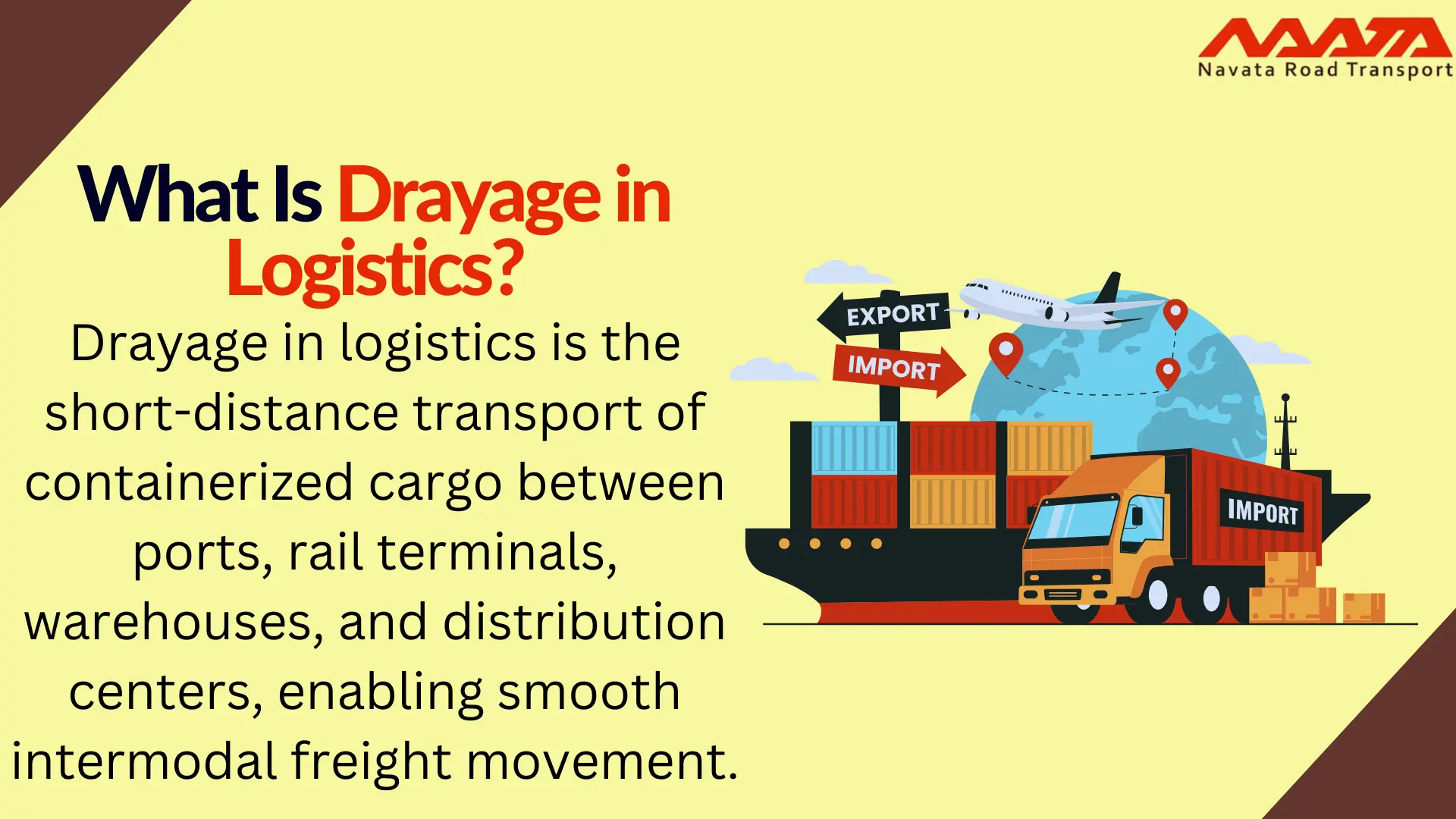
Drayage meaning in shipping refers to the short-distance transportation of containerized cargo between ports, rail terminals, container yards, warehouses, and distribution centers. It is a critical part of intermodal freight movement where containers move between different transportation modes without unloading the cargo itself.
In simple terms, drayage ensures that imported or exported containers do not remain stuck at ports. It helps move freight quickly to the next stage of transportation, whether by rail, truck, or final warehouse delivery.
In India, drayage is especially important at high-volume ports, where container turnaround speed directly affects freight cost and supply chain efficiency.
What Is Drayage Trucking?
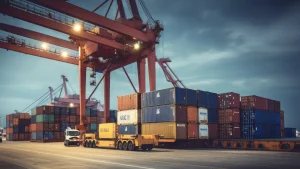
Drayage trucking refers to the use of specialized trucks and chassis to move shipping containers over short distances between ports, rail ramps, warehouses, and inland container depots. Unlike long-haul trucking, drayage trucking focuses on short but highly time-sensitive freight movement.
Drayage trucking plays a major role in first-mile logistics because delays at this stage create larger supply chain disruptions. Truck availability, chassis access, fuel cost, and port congestion all directly affect drayage trucking efficiency.
At major ports, drayage trucking is often the most critical factor in reducing demurrage and ensuring faster delivery schedules.
Drayage and Freight Forwarding: What’s the Connection?
Freight forwarding and drayage work closely together in international shipping. While freight forwarding manages the overall movement of cargo across countries and transport modes, drayage handles the short-distance container movement between freight nodes such as ports, rail terminals, and warehouses.
A freight forwarder may coordinate customs clearance, documentation, ocean freight, and inland delivery, but drayage ensures the physical container moves out of the port quickly and reaches the next transport point.
Without efficient drayage, even the best freight forwarding plan can fail due to port delays, detention charges, and missed delivery schedules.
This is why businesses working with freight forwarding services must also prioritize reliable drayage operations.
Where Drayage Fits in the Indian Supply Chain
India’s major container ports process millions of TEUs (twenty-foot equivalent units) annually. Once a container arrives at any of these ports, it cannot simply stay there. Port yards have limited space, and every extra day a container sits idle triggers penalty charges.
Common drayage movements in the Indian context include:
- Port → warehouse cluster
- Port → distribution centre
- Port → rail terminal for Dedicated Freight Corridor (DFC) transfer
- Port → Inland Container Depot (ICD)
- Port → Container Freight Station (CFS) for customs examination or consolidation
Without efficient drayage at these nodes, the entire import-export chain backs up — exactly what happens during congestion periods when thousands of containers get stuck waiting for truck slots.
How Drayage Works: Step-by-Step
A typical drayage operation in India follows this sequence:
Container arrives at the port or rail terminal
Vessel discharges. The container gets a port slot and a release order after customs clearance.
The drayage truck is assigned and dispatched
A drayage carrier or logistics provider assigns a truck + chassis. Driver goes to the port gate with proper documentation — Gate Pass, DO (Delivery Order), and truck registration.
The container is picked up from port yard
Truck enters port, container is loaded onto chassis. This step involves port scanning, weight checks, and exit gate procedures — which can take 2–6 hours during peak congestion.
The container is moved to the destination facility
Truck transports container to warehouse, ICD, CFS, or rail ramp — typically within short distances of the port in major logistics corridors.
The container is dropped, unloaded, or transferred
At the destination, the container is dropped for unloading or transferred to the next mode (rail, another truck). An empty container is returned to the port or nearest depot.
Why Drayage Is Critical for Modern Logistics in India
India’s logistics sector is growing rapidly — and so are the pain points. The government’s push for multimodal logistics parks, the Dedicated Freight Corridor (DFC), and PM Gati Shakti infrastructure projects all depend on one thing working well: first-mile freight movement from ports and rail heads. That’s drayage.
Real-World Impact — What Happens When Drayage Fails
During the JNPT congestion episodes of 2022–23, thousands of import containers sat idle for 7–15 extra days at the port. For each container, this triggered demurrage charges of ₹5,000–₹15,000 per day, missed warehouse delivery schedules, and cascading delays across the supply chain — all because drayage trucks couldn’t move containers out fast enough due to chassis shortages and yard congestion.
Key drivers making drayage more important in India right now:
- Rapid growth in containerized EXIM trade at Indian ports
- Expansion of CONCOR ICD network across tier-2 cities
- Just-in-time inventory models adopted by Indian manufacturers and e-commerce players
- DFC corridors reducing rail transit time — making first-mile port-to-rail drayage the new bottleneck
- Rising demurrage and detention costs are pushing companies to optimize container turnaround
Types of Drayage in Logistics
Most Common
Port Drayage:
Moving containers from a seaport to a nearby warehouse, CFS, or rail ramp. Usually involves short-haul movement. Highly time-sensitive due to free-time limits.
Rail + Road
Intermodal Drayage: Transferring containers between rail terminals and trucking hubs. Critical for the ICD and DFC network — requires port-to-rail-ramp drayage first.
Same Carrier
Intra-Carrier Drayage: Movement within the same logistics provider’s network. Operationally simpler but still requires dedicated drayage capacity.
Terminal to Terminal
Pier Drayage: Moving containers between different terminals within the same port facility. Common where different shipping lines use different berths and containers need realignment for vessel schedules.
E-Commerce
Door-to-Door Drayage: Combines the short-haul port movement with final delivery to the consignee. Increasingly used for B2C e-commerce imports directly into regional fulfilment centres.
Time-Critical
Expedited Drayage: Priority movement for time-sensitive cargo — pharma cold chain, perishables, automotive parts under just-in-time schedules. Premium pricing applies but prevents costly production or distribution shutdowns.
Demurrage vs Drayage — What's the Difference?
This is one of the most commonly confused terms in Indian logistics. Shippers often use them interchangeably — and it costs them money because they can’t identify which charge is which on their freight invoices.
Factor | Drayage | Demurrage |
What it is | A logistics service — the act of moving a container short-distance | A penalty charge for keeping a container at the port beyond the free time allowed |
Who charges it | Drayage carrier/trucking company / 3PL | Shipping line or port authority |
When it applies | Every time a container is moved between freight nodes | Only when the container stays at port beyond free days (usually 3–7 days) Indian context |
Indian context | JNPT → Bhiwandi truck movement = drayage cost | Container sitting at JNPT for 10 days = demurrage charge from shipping line |
How to reduce | Efficient scheduling, carrier reliability, avoiding port delays | Move containers via drayage before free time expires |
Key Challenges in Drayage Operations
Port congestion and unpredictable wait times:- Ports regularly face congestion during peak EXIM cycles, causing truck wait times of 4–12 hours at port gates — directly increasing drayage costs.
Chassis and truck shortages:- India’s drayage ecosystem has a structural shortage of chassis and qualified truck operators, especially for over-dimensional cargo and refrigerated containers.
Regulatory and documentation complexity:- EXIM documentation in India involves multiple agencies — Customs, Port Trust, shipping lines, and CFS operators. Any document mismatch delays truck dispatch.
Poor coordination between modes:- Rail-road coordination for CONCOR/DFC movements still lacks real-time visibility, causing drayage trucks to arrive at terminals without confirmed rail slot confirmations.
High fuel and labor costs:- Rising diesel prices and driver wage inflation are pushing drayage costs up consistently, squeezing margins on short-haul freight.
How Technology Is Transforming Drayage in India
Indian logistics technology is catching up fast. These are the tools actually being used by forward-thinking drayage operators and 3PLs in India right now:
Port Community Systems (PCS):
Ports operate PCS platforms that allow real-time container status tracking, gate appointment booking, and DO submission — reducing truck idle time at port gates significantly.
FOIS (Freight Operations Information System) — Indian Railways:
FOIS integration allows logistics managers to track rail consignments in real time, enabling better scheduling of drayage pickup at rail ramps.
TMS (Transport Management Systems):
Platforms like FarEye, Locus, and BlackBuck (India-specific) are being adopted by large 3PLs for automated drayage dispatch, route optimisation, and driver tracking.
GPS Fleet Telematics:
Real-time GPS tracking of drayage trucks allows shippers to monitor container movement from port gate to warehouse — reducing uncertainty and enabling proactive planning.
E-Way Bill Integration:
Digital integration with the GST E-Way Bill system has streamlined inter-state movement documentation, reducing checkpoint delays that used to slow drayage by hours.
Conclusion
Drayage in logistics may cover short distances, but its impact on supply chain performance is substantial. As global trade volumes rise and intermodal freight becomes more complex, efficient drayage operations are essential for reducing delays, controlling costs, and maintaining delivery commitments. For logistics providers and shippers alike, optimizing drayage is no longer optional, it is a competitive necessity.
Thank You For Reading: What Is Drayage in Logistics? Meaning, Process, Types, and Cost Impact
Powered By 360Presence
Leave a Replay
Recent Posts